
How to Clean Dental Bridgework Properly at Home
A dental bridge should feel like part of your smile, not something you are constantly worried about. Learning how to clean dental bridgework correctly helps protect the teeth and gums supporting it, keeps your breath fresh and gives your restoration the best chance of lasting for many years.
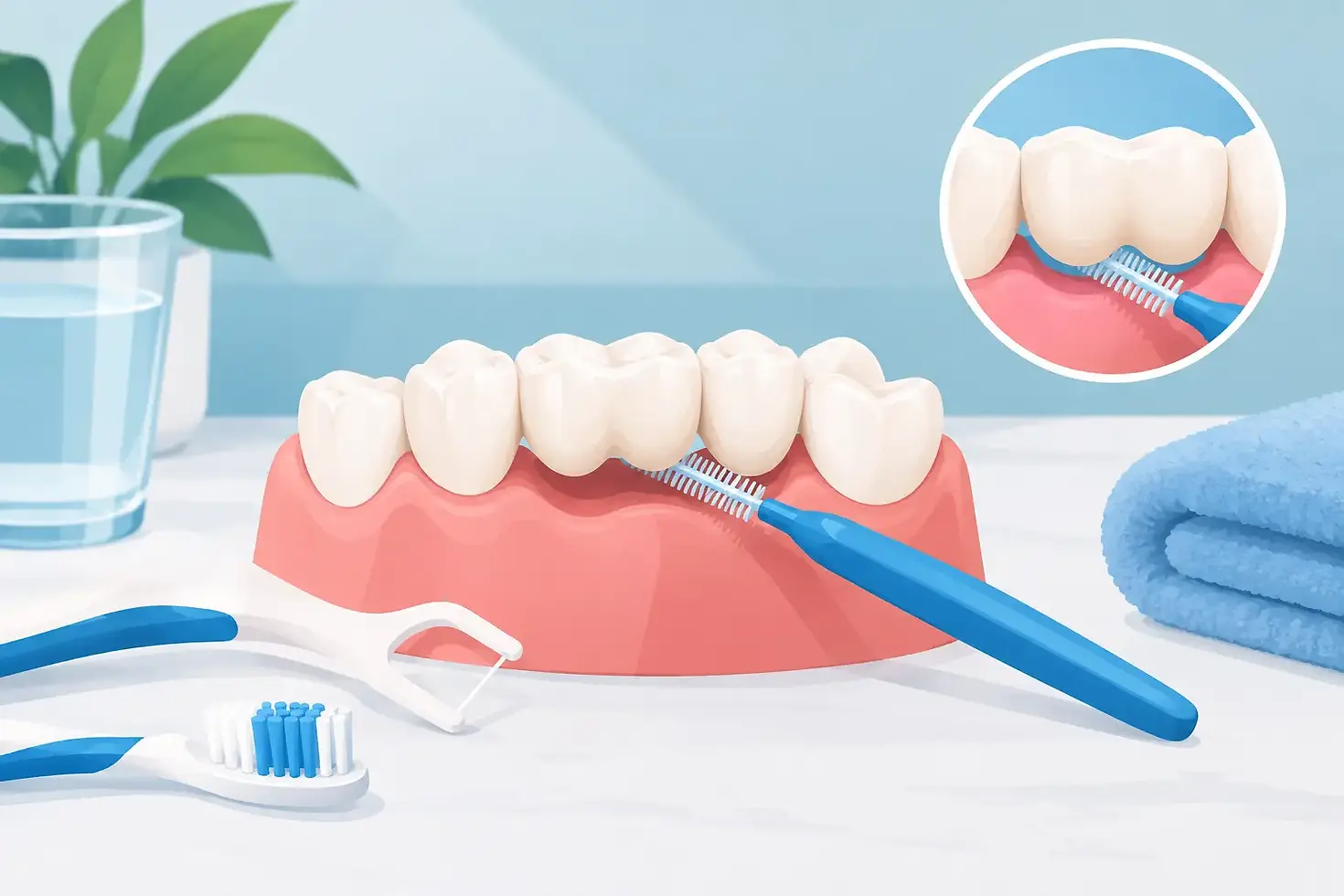
The key area is not the visible bridge itself. It is the space beneath the replacement tooth, where a toothbrush cannot reach. Plaque and food debris can collect there surprisingly quickly, which may lead to gum inflammation, decay around the supporting teeth and an unpleasant taste or smell. The good news is that a gentle, consistent routine makes a real difference.
Why cleaning beneath a dental bridge matters
A conventional fixed bridge is secured to natural teeth on either side of a gap. The replacement tooth in the middle is called a pontic, and it normally sits just above the gum. That small gap is intentional: it allows the gums to remain healthy and makes cleaning possible.
If plaque is left beneath the pontic or around the edges of the crowns, bacteria can irritate the gums. Over time, this can cause bleeding, tenderness and recession. Decay can also develop where the bridge meets a supporting tooth, often out of sight. A bridge may look perfectly sound from the front while problems are developing underneath it.
This does not mean bridge care needs to be complicated or uncomfortable. It simply needs the right tools and a routine you can maintain every day.
How to clean dental bridgework step by step
Clean your bridge twice daily, ideally once in the morning and once before bed. Take your time in the evening, when the goal is to remove the plaque and food debris that have built up during the day.
Brush carefully around every edge
Use a soft-bristled manual toothbrush or an electric toothbrush with a pressure sensor. Apply fluoride toothpaste and brush along the gumline with small, gentle movements. Clean the outer, inner and biting surfaces of the bridge, as well as the natural teeth beside it.
Pay particular attention to the join between the bridge and your gum. There is no need to scrub hard. Firm brushing can irritate the gums and may contribute to recession, especially if your gums are already sensitive. Gentle, thorough brushing is more effective than pressure.
If you use an electric toothbrush, guide it slowly from tooth to tooth rather than rushing. Let the brush do the work. It can be especially helpful for patients who find it difficult to clean consistently around several crowns or a larger bridge.
Use a bridge floss threader or super floss underneath
Ordinary floss cannot pass between a fixed bridge and the gum because the teeth are joined together. A floss threader or super floss is designed for this job. Both have a firmer end that can be guided under the pontic.
Thread the floss under the replacement tooth, then gently move the soft floss section back and forth along the gumline. Bring it around the supporting teeth where possible, rather than only cleaning the middle of the gap. Remove the floss slowly and use a fresh section before cleaning another area.
It may feel fiddly for the first few days, but most people become comfortable with the technique quickly. Your hygienist can demonstrate it in person if you are unsure. A few minutes of reassurance and practical guidance can make daily care feel far more straightforward.
Consider interdental brushes if they fit comfortably
Small interdental brushes may help clean around the sides of a bridge and between accessible natural teeth. They should slide in with light resistance, never force. A brush that is too large can hurt the gums or bend easily, while one that is too small may not clean effectively.
The right size depends on the spaces around your teeth and the design of your bridge. It is common to need more than one size in different parts of the mouth. A dental professional can recommend suitable brushes rather than leaving you to guess.
An oral irrigator can be a useful extra
An oral irrigator uses a targeted stream of water to flush away loose debris around the gums and beneath bridgework. It can be a helpful addition for people with limited dexterity, sensitive gums or a more complex restoration.
However, it should not usually replace cleaning under the bridge with floss or a specialised brush. Water irrigation is excellent for rinsing, but it may not remove sticky plaque as reliably as physical contact with floss. Think of it as a valuable supporting tool, not the entire routine.
Finish by cleaning your tongue and rinsing if advised
Bacteria also collect on the tongue, contributing to bad breath. A tongue cleaner or gentle brushing can help keep your mouth feeling fresher. If your dentist has recommended a mouthwash, use it at a different time from brushing where possible, so you do not immediately wash away the concentrated fluoride from your toothpaste.
Choose products carefully. A fluoride mouthwash may be useful if you are at higher risk of decay around the bridge margins. Strong antiseptic mouthwashes are not usually needed long term unless specifically recommended, as some can cause staining or alter taste.
What if your bridge is supported by implants?
The principles are similar, but implant-supported bridges need particularly attentive gum care. Unlike natural teeth, implants do not have the same protective ligament around the root, so inflammation around them should be taken seriously.
Use a soft toothbrush and clean around the gumline daily. Special implant floss, non-metal interdental brushes and an oral irrigator may all be recommended depending on your restoration. Avoid using sharp objects or metal instruments under the bridge, as these can damage the restoration or irritate the tissues.
The design of an implant bridge affects how you clean it. Some bridges have enough space beneath them for a brush to pass through easily, while others require floss threaders or specially shaped tools. Your dentist or hygienist should give you tailored cleaning advice when your bridge is fitted and review it at your maintenance appointments.
Common mistakes to avoid
The most common mistake is cleaning only what you can see. A bridge can look polished and bright while plaque remains beneath the pontic. Skipping this area occasionally is unlikely to cause an immediate problem, but making it a habit puts the gums and supporting teeth at risk.
Avoid using toothpicks, pins or other sharp items to remove trapped food. These can injure the gums, scratch porcelain or composite, and may leave you feeling more uncomfortable. It is also wise to avoid whitening toothpaste that feels very abrasive, particularly if you have porcelain bridgework. It will not whiten the restoration itself and may wear the natural tooth surface over time.
Do not ignore regular hygiene appointments because your bridge feels stable. Professional cleaning removes deposits that home care cannot fully shift, while examinations allow your dentist to check the bridge edges, supporting teeth, bite and gum health. Early changes are often simpler and more comfortable to manage.
When to arrange a dental check-up
Healthy gums around a bridge should not bleed regularly. Book an appointment if you notice bleeding that continues beyond a week of improved cleaning, swelling, persistent bad breath, a bad taste, pain when biting or sensitivity around the supporting teeth.
You should also seek advice if the bridge feels loose, chipped, rough or different when you bite. Never try to glue a loose bridge back yourself. Household adhesives are not safe for use in the mouth and can make professional repair more difficult.
At Scarborough Dental & Implant Clinic, we take time to assess not just the bridge but the health of the gums and teeth that support it. Whether you need a hygiene review, a repair or simply more confidence with your home routine, a calm, personalised appointment can help you protect your smile without judgement.
A well-made bridge can restore the comfort of eating, speaking and smiling with confidence. Give it the same considerate care you would give your natural teeth, especially in the hidden areas, and ask for help early if something does not feel right.


Comments