

Invisalign Crowding Case Study for Straighter Teeth
A crowded smile can affect far more than photographs. When teeth overlap, it may feel harder to clean between them properly, and many people become used to covering their mouth when they laugh or speak. This Invisalign crowding case study illustrates how clear aligner treatment can improve alignment in a measured, comfortable way, while keeping the result natural-looking and tailored to the individual.
The patient details below have been anonymised and simplified, but the clinical decisions reflect the kind of careful planning used in real Invisalign treatment. Every smile is different, so a consultation and assessment are always needed before deciding whether clear aligners are the right approach.
The concern: lower front teeth that had gradually crowded
Our patient was an adult who had noticed increasing overlap of the lower front teeth over several years. One lower incisor had moved behind the neighbouring teeth, creating an uneven appearance and a narrow area that was difficult to brush and floss. The upper front teeth were also mildly rotated, although the patient’s bite was generally comfortable.
Their main goal was not a dramatic or artificial-looking smile makeover. They wanted teeth that looked more even, were easier to keep clean and allowed them to smile without thinking twice. They were keen to avoid fixed braces if possible, particularly because of work and social commitments.
This is a common presentation. Teeth can shift throughout adulthood, even if orthodontic treatment was completed years earlier. Changes in bite forces, tooth wear, gum health and the natural movement of teeth over time can all play a part. Crowding is not simply a cosmetic issue, either. Where teeth overlap tightly, plaque can collect in places that are harder to reach, increasing the need for careful hygiene support.
Invisalign crowding case study: planning before movement
The first step was not to fit aligners. A healthy, stable foundation matters before any tooth movement begins. The patient received a full examination, including an assessment of the teeth, gums, bite and existing restorations. We also discussed their dental history, expectations and how consistently they felt able to wear clear aligners.
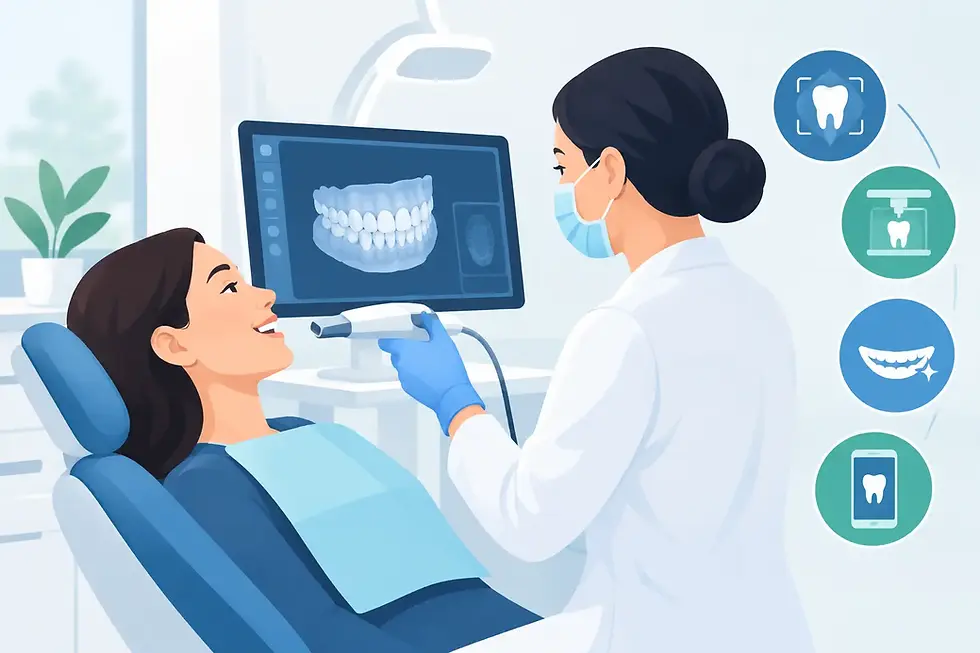
Digital scans were taken to create a detailed 3D model of the teeth. This allows the dentist to assess the extent of crowding, plan small movements precisely and show the patient a proposed sequence of changes. It is useful for visualising the treatment, but it is not a guarantee of an exact final result. Teeth and gums respond biologically, and treatment needs to be monitored and refined where necessary.
A key part of the planning was making enough room for the crowded lower teeth without compromising the patient’s smile or bite. In this case, the crowding was mild to moderate. Rather than removing teeth, the plan used a combination of gentle arch development, controlled tooth movement and minimal interproximal reduction. This means carefully smoothing a very small amount of enamel between selected teeth to create space. It is not appropriate for everyone, but when indicated and carried out conservatively, it can avoid placing teeth too far forwards.
The patient was also advised that a few tooth-coloured attachments would be needed. These small, temporary shapes are bonded to certain teeth and help the aligners apply the right force in the right direction. They are discreet, but clear aligner treatment is not completely invisible. Honest conversations about details like this help avoid surprises and give patients confidence in the process.
Why crowding needs a personalised plan
It can be tempting to view crowded teeth as a simple straightening problem. In reality, the best plan depends on the shape of the jaw, the position of the roots, the bite, gum health, facial balance and the amount of space available. Moving teeth too quickly or too far may create instability, gum recession risks or an outcome that does not sit comfortably with the bite.
For some patients, Invisalign is an excellent choice. For others, fixed braces, restorative treatment or a combined approach may be more suitable. Significant gum disease must be stabilised first, and more complex skeletal bite concerns may require a different orthodontic solution. A responsible recommendation starts with what is safest and most predictable, not simply what appears most convenient.
Treatment: small changes, carefully monitored
The patient received a series of custom-made clear aligners, each designed to make gradual movements. They were asked to wear them for around 20 to 22 hours each day, removing them for meals and for brushing and flossing. This level of commitment is central to success. Aligners can be removed, but leaving them out for extended periods may slow progress and affect the fit of the next set.
Appointments were scheduled to check that the aligners were seating correctly, the teeth were responding as planned and the gums remained healthy. These reviews are reassuring for patients and clinically valuable. If an individual tooth does not track as expected, the treatment can be adjusted rather than simply continuing with a plan that no longer reflects what is happening in the mouth.
The patient found that the first few days with a new aligner brought a feeling of pressure, particularly around the more crowded lower teeth. This is usually a sign that the aligner is active, and it tends to settle quickly. Speaking may feel slightly different at first, and removing aligners can take practice, but most people adapt well once a routine is established.
Clear aligners also require a little organisation. The patient kept a case with them rather than wrapping aligners in a tissue, which is an easy way for them to be misplaced. They cleaned the aligners gently each day and brushed before putting them back in after food where possible. Good hygiene is especially important during orthodontic treatment because healthy gums support healthy tooth movement.
What changed during treatment
As the crowding improved, the lower front teeth began to sit in a more even line. The tooth that had been tucked behind its neighbours was guided into the arch, while the small rotations in the upper front teeth were reduced. The aim was not to create a uniform, overly bright smile, but to improve balance while preserving the character of the patient’s natural teeth.
The treatment did require a refinement stage. This is not unusual. After the initial aligners were completed, fresh digital scans were taken and a short additional series was made to improve the final positioning of the lower incisors. Refinements can be a sensible part of achieving a polished result, particularly where rotations or close contacts are involved.
At the end of active treatment, the patient reported that cleaning between the lower front teeth felt much easier. They also felt more relaxed smiling in photographs. The result was subtle enough to look like their own smile, simply healthier, more balanced and more confident.
Retention: protecting the result for the long term
Straightening teeth is only one part of orthodontic care. Teeth have a natural tendency to move over time, which is why retainers are essential after Invisalign treatment. For this patient, retainers were provided to hold the teeth in their new positions, with clear guidance on how and when to wear them.
The retention plan may vary from person to person. Some people are advised to wear retainers full-time initially before changing to night-time wear, while others may have additional fixed retention behind the front teeth. The right choice depends on the original crowding, bite and the likelihood of relapse.
Regular dental and hygiene appointments remain valuable after treatment. They help protect gum health, monitor the bite and maintain the natural-looking result that has been achieved. If teeth have become worn, chipped or discoloured, some patients may later consider gentle finishing treatments such as whitening or composite bonding, but these should only be considered if they genuinely add value to the smile.
Is Invisalign suitable for your crowded teeth?
Invisalign can be a discreet and effective option for many adults with mild to moderate crowding, but treatment is never one-size-fits-all. The best outcomes come from combining advanced digital planning with a thorough clinical assessment, realistic expectations and consistent wear.
At Scarborough Dental & Implant Clinic, the focus is on making this process feel calm and clear from the first conversation. A welcoming consultation can help you understand what is causing your crowding, whether aligners are appropriate and what a healthy, natural-looking result could involve. Taking that first step does not commit you to treatment, but it can give you a clearer path towards a smile you feel comfortable sharing.


Comments