
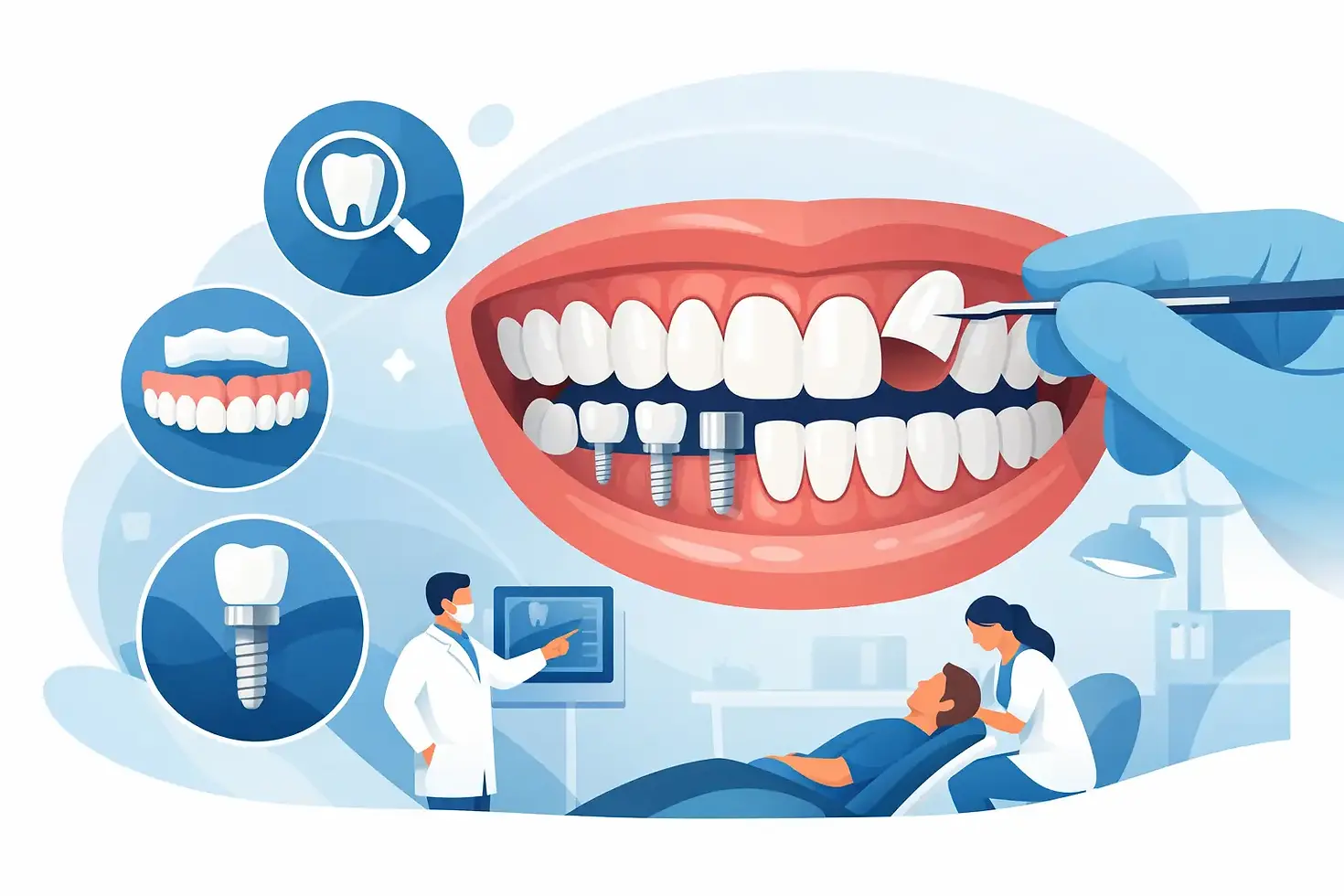
What Is Full Mouth Rehabilitation?
When several dental problems start to affect your day-to-day life at once, it rarely feels like a single issue. You may be struggling to chew on one side, hiding worn or broken teeth when you smile, dealing with repeated infections, or finding that older dental work is no longer holding up. Full mouth rehabilitation is designed for exactly this kind of situation - a carefully planned way to rebuild oral health, function and appearance together rather than treating each problem in isolation.
For many patients, the biggest relief is simply discovering there is a clear path forward. If your teeth have become difficult to manage, uncomfortable, or a source of embarrassment, a well-planned treatment can restore more than your smile. It can make eating easier, reduce pain, support long-term oral health and help you feel like yourself again.
What does full mouth rehabilitation involve?
Full mouth rehabilitation is a tailored programme of dental treatment used to restore most or all of the teeth in the upper and lower jaws. It is not one single procedure. Instead, it combines the treatments needed to address damage, tooth loss, wear, bite problems and the health of the gums and supporting bone.
Because every mouth is different, no two plans look the same. One patient may need a combination of crowns, bridges and gum treatment. Another may require dental implants, extractions, composite bonding and replacement of older fillings. Someone with severe tooth wear may also need bite adjustment and carefully designed restorations to rebuild lost tooth structure.
The aim is not only to make teeth look better. A successful result should feel comfortable, work properly and last well. That means your dentist must consider how the teeth meet, how the jaw functions, which teeth can be preserved, and where stronger long-term support is needed.
Who may need full mouth rehabilitation?
This type of treatment is often suitable for people whose dental concerns have built up over time. You might have multiple missing teeth, heavily worn teeth from grinding, repeated breakages, failing crowns or bridges, advanced decay, or a bite that no longer feels stable. Some patients come in because they are in discomfort. Others are not in pain but have reached a point where eating, speaking or smiling no longer feels natural.
Full mouth rehabilitation can also help after years of patchwork dentistry. It is common for patients to have had different treatments done at different times, each solving one immediate problem but not always fitting into a bigger plan. Eventually, this can lead to uneven wear, strain on certain teeth, and restorations that need replacing more often than they should.
There are also cases where appearance and function are closely linked. Worn front teeth may affect confidence, but they can also point to a deeper issue with bite balance. Missing back teeth may not show when you smile, yet they can place extra pressure on the remaining teeth and change the way you chew. Looking at the whole mouth helps identify the real cause rather than only the visible symptom.
Full mouth rehabilitation treatment options
Treatment usually starts with a detailed assessment. This may include digital scans, photographs, X-rays and a close evaluation of your bite, gum health and existing dental work. Modern planning is particularly valuable in complex cases because it allows your dentist to map out treatment in stages and show how the final result is intended to function and look.
The treatments used in full mouth rehabilitation can include fillings, inlays, onlays, crowns, bridges, veneers, root canal treatment, gum therapy and tooth replacement with dental implants or dentures. In some cases, Invisalign or another form of orthodontic treatment may be used first to improve tooth position before restorations are placed.
Teeth that are healthy enough to save are usually preserved wherever possible. That matters because keeping natural tooth structure is often the best option when it can be done predictably. At the same time, some teeth are simply too damaged or too weak to provide long-term value. In those situations, removing a failing tooth and replacing it properly may be the kinder and more durable decision.
This is where experience and planning matter. There is often more than one clinically sound route, but the right choice depends on your goals, the condition of your teeth, your budget and the level of maintenance you are comfortable with.
Why planning matters so much
Comprehensive treatment should never feel rushed. In full mouth rehabilitation, every decision affects the next one. The height and shape of restorations, the way the upper and lower teeth meet, and the placement of implants or bridges all need to work together.
If the bite is not carefully managed, even attractive dental work can feel uncomfortable or wear down too quickly. If gum disease or active decay is not stabilised first, the final result may be compromised from the start. Good treatment planning creates the foundation for predictable results and helps avoid repeated repairs later on.
This is also why staged treatment is often the best approach. You may begin with hygiene care, treatment for infection, extractions or temporary restorations before moving on to the final phase. While some patients hope for a quick fix, complex dentistry tends to be most successful when it is done in the right order rather than the fastest one.
What are the benefits of full mouth rehabilitation?
The benefits are often both practical and emotional. Patients usually notice improved comfort when eating, better stability when biting, and less worry about teeth breaking or shifting. Speech can improve too, particularly where missing teeth or worn edges have changed the way sounds are formed.
Aesthetics matter as well, and that is entirely valid. When a smile has been affected by wear, gaps, discolouration or uneven dental work, it can change how you feel in social situations, photographs and work settings. The best restorative dentistry does not look artificial or overdone. It should look natural, suit your face and help you feel more confident without making you feel unlike yourself.
There is also a long-term health benefit in bringing the whole mouth into better balance. Restoring damaged areas early can reduce strain on remaining teeth and make future care more manageable. That does not mean every result lasts forever without upkeep, but it can significantly improve the outlook for your oral health.
What to expect during treatment
One of the most common worries is whether treatment will feel overwhelming. That is understandable, especially if you have been putting things off for some time or have had difficult dental experiences in the past. A caring and well-organised approach can make a real difference.
At a modern practice, treatment should be explained clearly from the start. You should know what has been found, which options are available, how long each stage is likely to take, and what the likely costs and maintenance needs will be. A personalised plan gives structure and reassurance, especially when there are several steps involved.
Comfort matters throughout. Gentle techniques, modern anaesthesia and thoughtful pacing can help make even larger treatment plans feel much more manageable than patients expect. In many cases, dedicated treatment coordination is helpful too, as it gives patients one clear point of contact while they move through each stage.
Is full mouth rehabilitation worth it?
For the right patient, yes - but it depends on what is being compared. If you continue with emergency fixes and repeated repairs, treatment can become frustrating, costly over time and emotionally draining. A comprehensive plan often offers better stability and a clearer long-term outcome.
That said, not everyone needs or wants the most extensive option. Sometimes a phased approach is better, beginning with urgent problems and building towards the final goal over time. Sometimes a patient values function above cosmetic refinement, or prefers a simpler solution that fits their circumstances. Good dentistry should respect that.
At Scarborough Dental & Implant Clinic, this kind of treatment is approached with a balance of advanced planning, gentle care and realistic advice. The goal is not to oversell complexity. It is to create a treatment plan that genuinely improves comfort, confidence and long-term oral health in a way that feels achievable for the individual patient.
Taking the first step towards full mouth rehabilitation
Many people wait longer than they need to because they assume their mouth is too far gone, treatment will be uncomfortable, or they will be judged for leaving problems untreated. In reality, these cases are exactly where a supportive, experienced dental team can make the biggest difference.
The first step is simply an assessment and an honest conversation about what is possible. Once you understand the condition of your teeth and the options available, the situation often feels far less daunting. A carefully planned full mouth rehabilitation can turn a cycle of worry and temporary fixes into something much steadier - a healthier mouth, a more comfortable bite, and the quiet confidence that comes from knowing your smile works as well as it looks.


Comments