
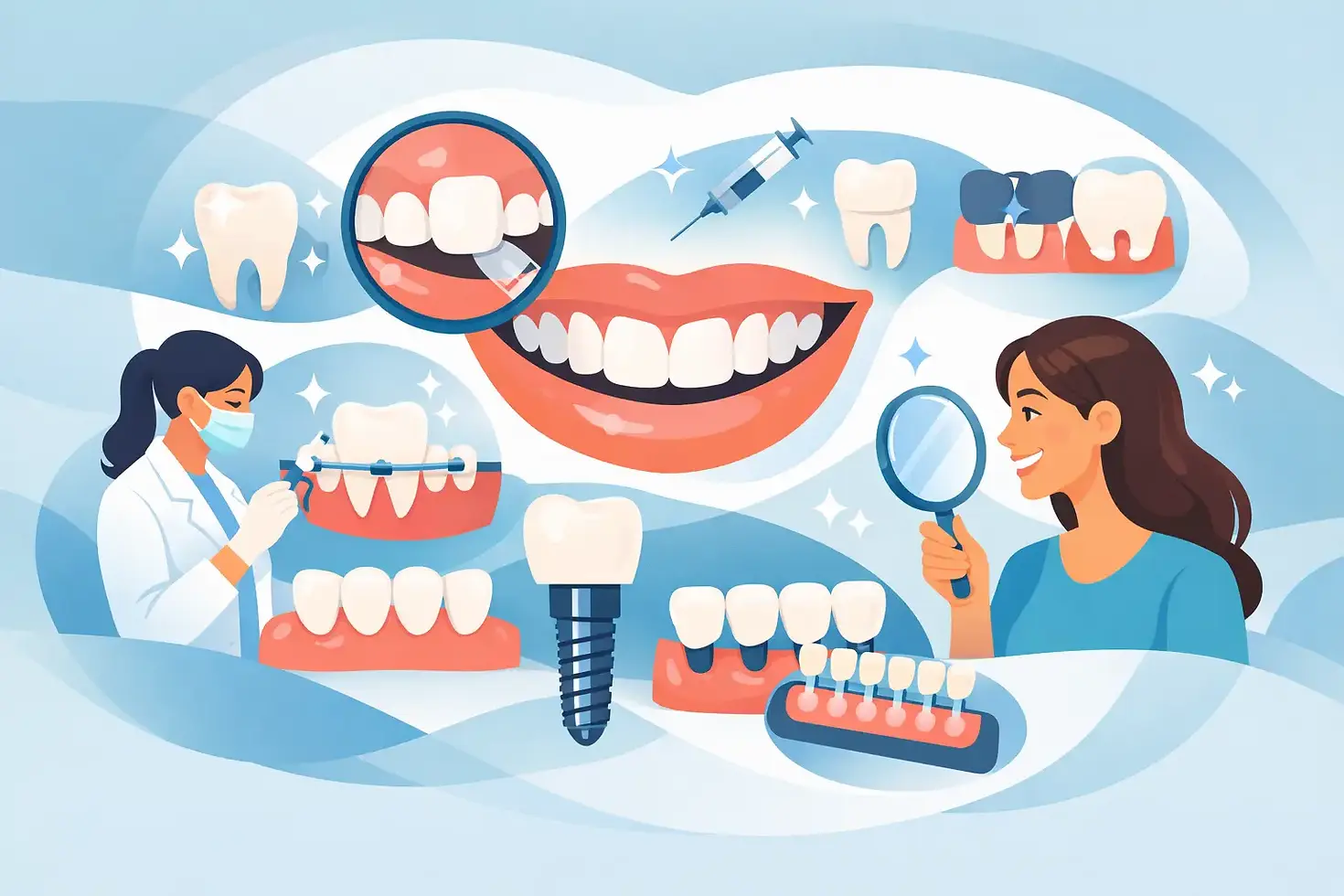
10 Examples of Cosmetic Dentistry Treatments
A smile makeover is rarely about vanity alone. For many people, it starts with something quite practical - a chipped front tooth, worn edges, staining that no whitening toothpaste shifts, or teeth that make them feel self-conscious in photos and conversations. Looking at examples of cosmetic dentistry treatments can help you understand what is possible, but just as importantly, what is most suitable for your own teeth, bite and long-term oral health.
Cosmetic dentistry covers a wide range of treatments designed to improve the appearance of your teeth and smile. In many cases, these treatments also support comfort, function and confidence. The right choice depends on what bothers you now, the condition of your teeth and gums, and whether you want a subtle improvement or a more comprehensive change.
Examples of cosmetic dentistry treatments and what they do
Some cosmetic treatments are quick and conservative, while others involve more planning and are best seen as part of a wider restorative approach. That is why a personalised assessment matters. A treatment that looks ideal for one patient may not be the best option for another.
Teeth whitening
Professional teeth whitening is one of the most popular cosmetic treatments because it can make a noticeable difference without changing the shape of the teeth. It is often a good option for patients whose teeth are healthy but have become darker over time due to coffee, tea, red wine, smoking or simply age.
The main advantage is simplicity. Whitening can brighten the smile by several shades and often helps people feel more confident very quickly. That said, it does have limits. It will not change the colour of crowns, fillings or veneers, and some types of deep internal staining may respond less predictably. Patients with sensitivity may also need a gentler approach.
Composite bonding
Composite bonding uses tooth-coloured resin to improve the shape, size or surface of a tooth. It can be used to repair chips, close small gaps, smooth uneven edges or disguise minor wear. For many patients, bonding is appealing because it is usually more conservative than other cosmetic options.
Done well, it can look very natural. It is especially useful for small to moderate changes where the underlying teeth are otherwise in good condition. The trade-off is durability. Composite is strong, but it can stain, chip or wear over time and may need maintenance or replacement sooner than porcelain.
Porcelain veneers
Veneers are thin porcelain shells designed to cover the front surface of teeth. They are often chosen when a patient wants to improve colour, shape, symmetry and proportion at the same time. Veneers can be particularly effective for teeth that are heavily stained, slightly misshapen or uneven in appearance.
One of the biggest benefits is the level of refinement they can offer. Porcelain reflects light in a very tooth-like way, so the result can be beautifully natural when carefully planned. However, veneers are not the right answer for every smile. They usually involve some preparation of the tooth, and they are best suited to patients with healthy gums and a stable bite.
Invisalign and clear aligners
Straighter teeth can transform a smile, and orthodontic treatment is often one of the most valuable cosmetic improvements because it addresses position rather than simply covering it. Invisalign and other clear aligner systems are popular with adults who want a discreet way to correct crowding, spacing or mild to moderate bite issues.
The cosmetic benefit is obvious, but the health benefit matters too. Straighter teeth are often easier to clean and may wear more evenly. Not every case is suitable for aligners alone, and treatment requires commitment. You need to wear the aligners as advised, and some patients may still need additional cosmetic finishing such as whitening or bonding once the teeth are in better positions.
More examples of cosmetic dentistry treatments
The term cosmetic dentistry is often associated with front teeth, but treatment can extend well beyond that. In some cases, improving a smile also means restoring damaged or missing teeth so the result feels as good as it looks.
Ceramic crowns
Crowns are sometimes thought of as purely restorative, but modern ceramic crowns can also play an important cosmetic role. If a tooth is heavily filled, broken down or weakened, a crown may be the best way to improve both appearance and strength.
This is where good planning becomes essential. A crown can look excellent, but it also needs to fit the bite properly and protect the tooth for the long term. For patients with severely worn or damaged teeth, crowns may be part of a broader smile and bite rehabilitation rather than a simple cosmetic fix.
Gum contouring
Sometimes the teeth are not the main issue - the gum line is. If a patient feels they show too much gum when they smile, or if the gum levels appear uneven, gum contouring can help create better balance. Even a small adjustment can make teeth look more proportionate and symmetrical.
This treatment is not suitable for everyone, and the underlying reason for the gum appearance must be understood first. Gum health always comes before cosmetic improvement. When the case is well selected, though, the change can be subtle and very effective.
White fillings and tooth-coloured restorations
Replacing old dark fillings with tooth-coloured materials can freshen the smile, especially when metal fillings are visible on front or premolar teeth. Tooth-coloured restorations can also repair small areas of decay or damage in a way that blends naturally with the surrounding tooth.
This may sound like a modest treatment, but small details often make a surprising difference. If you laugh or speak and notice dark areas in your teeth, replacing unsuitable restorations can help the smile look cleaner and more uniform.
Dental implants
When a missing tooth affects the appearance of your smile, a dental implant can be one of the most life-changing options. Implants replace the root as well as the visible tooth, which helps support function, stability and appearance. They are often chosen because they feel secure and can look extremely natural.
Implants are also an important example of where cosmetic and restorative dentistry overlap. Replacing a missing tooth is not only about the visible gap. It can help maintain bite stability, preserve confidence when eating and speaking, and support long-term oral health. Treatment does take time and careful planning, and not every patient will be suitable without preparatory work such as bone or gum treatment.
Choosing between cosmetic dentistry treatments
When patients compare examples of cosmetic dentistry treatments, it is easy to focus on the final before-and-after image. What matters more is whether the treatment matches your priorities. Some people want the quickest improvement possible before a wedding or important event. Others want the most conservative option. Others are looking for a complete reset after years of wear, breakage or missing teeth.
There is rarely a one-size-fits-all answer. Whitening may be enough for one person. Another may benefit more from straightening first, then whitening and bonding. Someone with worn, failing or missing teeth may need a more comprehensive plan that combines cosmetic and restorative care.
A good clinician will also talk honestly about maintenance. Cosmetic dentistry is not just about the day the treatment is finished. Composite bonding may need polishing or repair. Whitening may need top-ups. Veneers and crowns need good home care and regular reviews. Aligners require retainers if you want to keep the teeth in position.
What natural-looking cosmetic dentistry should feel like
The best cosmetic dentistry does not look artificial or draw attention for the wrong reasons. Most patients do not want teeth that look too bright, too bulky or unlike the rest of their face. They want to look fresher, healthier and more confident while still looking like themselves.
That is why modern treatment planning is so valuable. Careful shade selection, digital imaging, detailed assessment of facial proportions and bite analysis all help create results that are flattering as well as functional. At Scarborough Dental & Implant Clinic, this personalised approach is an important part of making treatment feel calm, clear and genuinely patient-centred.
For nervous patients, the experience matters just as much as the outcome. Cosmetic treatment should never feel rushed or confusing. You should understand your options, the likely result, the costs involved and any trade-offs before you decide how to proceed.
Sometimes the most worthwhile next step is not choosing a treatment straight away, but having a conversation about what is bothering you and why. A small change may be enough to restore confidence. In more complex cases, a carefully phased plan can improve not just the look of your smile, but comfort, function and peace of mind too.
If you have been wondering which cosmetic treatment may suit you, start with what you want to change and what you want to keep. The best smile improvements are the ones that feel natural, fit your lifestyle and support your oral health for years to come.


Comments