
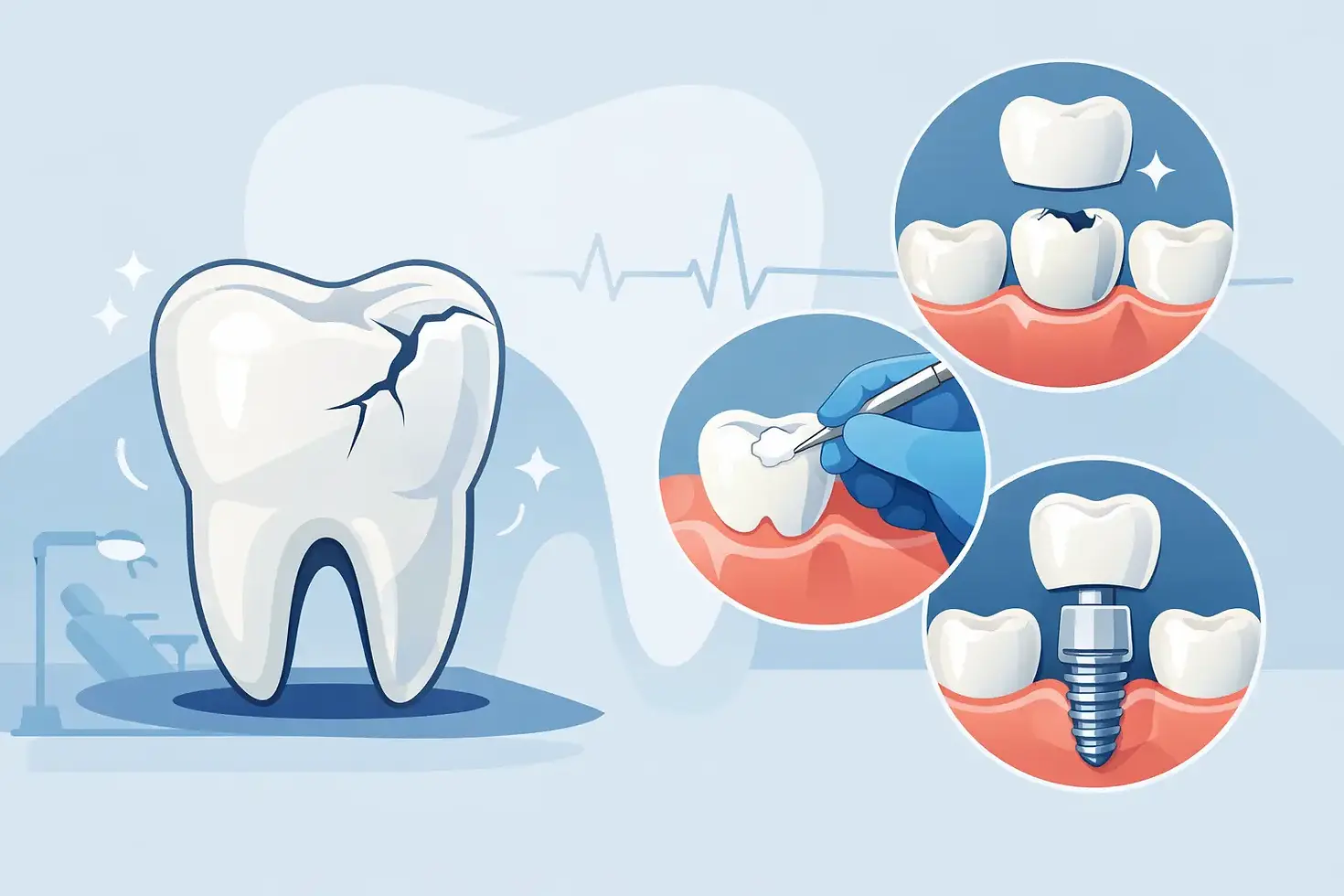
Can a Broken Tooth Be Saved? Your Options
A sharp edge on your tongue, pain when you bite, or the sight of a piece of tooth in your hand can be unsettling. The reassuring answer is that can a broken tooth be saved is often answered with yes - especially when you arrange an assessment promptly. Modern restorative dentistry can repair many chipped, cracked and fractured teeth while protecting their appearance, strength and long-term function.
The right treatment depends on more than the size of the visible break. Your dentist needs to assess how deep the damage extends, whether the nerve inside the tooth has been affected, how stable the remaining tooth structure is and whether the root is healthy. A calm, timely examination gives you the best chance of keeping your natural tooth.
Can a broken tooth be saved? It depends on the break
Teeth are remarkably strong, but they can break after biting something hard, a fall or sporting injury, decay weakening the tooth from within, or an old filling or crown no longer supporting it properly. Some cracks also develop gradually through clenching and grinding.
A small chip affecting only the hard outer enamel is usually straightforward to restore. A deeper fracture can expose the sensitive dentine beneath it, causing sharp pain from cold drinks, sweet foods or pressure. If the break reaches the pulp - the living tissue containing the nerve and blood supply - the tooth may need root canal treatment before it can be restored securely.
A crack that travels below the gum line or down into the root is more complex. In some cases, a dentist can still save part of the tooth with careful treatment. In others, particularly where a vertical root fracture has split the tooth, removal may offer the most predictable and comfortable outcome. The aim is never simply to patch a tooth temporarily. It is to choose a solution that gives you a healthy, functional and natural-looking result.
What to do when a tooth breaks
Try not to panic. Rinse your mouth gently with warm water and keep any broken fragment if you can find it. Occasionally, a fragment can be bonded back into place, although this is not always suitable or durable. If there is bleeding, apply gentle pressure with clean gauze or a clean cloth.
Avoid chewing on that side and choose soft foods until you have been seen. A sharp edge can sometimes be covered temporarily with dental wax from a pharmacy, or sugar-free chewing gum in a short-term emergency, to prevent it rubbing your cheek or tongue. Do not attempt to glue the piece back yourself.
Contact a dentist as soon as possible, even if the tooth is not painful. Damage can be deeper than it looks, and early treatment may prevent infection, further fracture or a more extensive repair later. Severe swelling, uncontrolled bleeding, a facial injury, difficulty breathing or swallowing, or a tooth that has been completely knocked out requires urgent professional advice.
How dentists assess a fractured tooth
A thorough assessment is the foundation of a successful repair. Your dentist will look closely at the tooth and surrounding gums, check your bite and ask about symptoms such as sensitivity, pain on biting or pain that lingers after hot or cold foods. Digital X-rays may be used to assess the root, bone and any signs of infection that cannot be seen from the surface.
Small cracks can be difficult to detect. Special lighting, magnification, bite tests and photographs can help identify where the tooth has fractured and whether the crack is likely to spread. This careful planning matters because the best treatment for a chipped front tooth may be very different from the best treatment for a heavily cracked back tooth.
You should also expect a clear conversation about your priorities. For some patients, preserving as much natural tooth as possible is the main goal. Others need a durable solution for a tooth that takes heavy biting forces, or a highly aesthetic repair in the smile zone. A personalised plan should balance tooth preservation, comfort, appearance, longevity and budget.
Treatments that may save a broken tooth
Composite bonding for small chips and edges
For minor chips, composite bonding can rebuild the missing area with tooth-coloured material. It is conservative because little or no healthy tooth structure needs to be removed. The material is shaped and polished to blend with your smile, making it a popular option for visible front teeth.
Bonding is often completed in one appointment, but it can stain or chip over time and may need maintenance, particularly if you bite your nails, chew pens or grind your teeth. A night guard may be recommended where clenching is contributing to repeated damage.
A filling, inlay or onlay for a damaged biting surface
When a section of a back tooth has broken around an existing filling or area of decay, a new filling may be enough if plenty of strong tooth remains. Where the damage is more substantial, a laboratory-made ceramic inlay or onlay can restore the shape of the tooth and reinforce the weakened cusps - the pointed areas used for chewing.
An onlay is designed to preserve more natural tooth than a full crown where appropriate. It can be an excellent middle ground, although it is not suitable when the remaining tooth walls are too thin or the fracture is too extensive.
A dental crown for strength and protection
A crown covers and protects the visible part of a heavily weakened tooth. It may be recommended after a large fracture, following root canal treatment, or when a tooth has lost too much structure to support a filling reliably. Modern ceramic crowns can be carefully colour-matched and shaped for a natural-looking result.
A crown does require preparation of the tooth, so it is not the first choice for every small break. However, for the right case, it can prevent the tooth from splitting further and make eating feel comfortable and confident again.
Root canal treatment when the nerve is exposed or infected
If the fracture has reached the pulp, bacteria can enter and cause inflammation or infection. Root canal treatment removes the damaged tissue from inside the tooth, cleans and seals the root canals, and allows the tooth to remain in place. The tooth is then restored, often with a crown or onlay, to protect it against future fracture.
Root canal treatment has an unfair reputation for being something to fear. With modern techniques and effective local anaesthetic, treatment is usually carried out gently and with patient comfort in mind. Addressing infection early can relieve pain and help avoid the need for extraction.
When a broken tooth cannot be saved
There are occasions when keeping the tooth is not the healthiest long-term choice. This may be the case if the crack extends deeply into the root, there is too little stable tooth above the gum line to support a restoration, severe decay has destroyed the tooth, or repeated treatment has left the tooth with a poor outlook.
If extraction is recommended, it does not mean you have run out of options. Replacing a missing tooth can restore chewing ability, support your bite and prevent neighbouring teeth from drifting. Depending on your oral health and goals, options may include a dental implant, a bridge or a removable denture.
Dental implants are often considered when patients want a fixed, independent replacement that looks and feels close to a natural tooth. Not everyone is suitable immediately - gum health, bone levels, general health and the position of the missing tooth all need to be considered. A detailed consultation can clarify which approach offers the best balance of appearance, function and long-term stability.
Why waiting can make a repair harder
A broken tooth does not always hurt straight away. That can create a false sense of security. Even a painless crack may allow bacteria to enter, or it may worsen under normal chewing forces until a previously repairable tooth becomes more difficult to restore.
Prompt care also gives your dentist more options. At Scarborough Dental & Implant Clinic, treatment planning is focused on understanding the full picture, explaining your choices clearly and delivering care in a gentle, welcoming setting. Whether the answer is a small bonded repair, a protective crown or a carefully planned replacement, you should know why it has been recommended and what to expect.
If a tooth has broken, take it seriously but do not assume the worst. Arrange an assessment, protect the area from further damage and let a dentist look for the most conservative, durable way forward. The sooner you are seen, the more likely you are to move from worry to a comfortable smile you can rely on.


Comments