
Can Veneers Stain? Care for a Brighter Smile
A freshly enhanced smile should feel like a confidence boost, not another thing to worry about every time you order a coffee. So, can veneers stain? The honest answer is that it depends on the material, how old the veneers are and the condition of the teeth and gums around them. With the right care, well-made veneers can stay beautifully natural-looking for many years.
Can veneers stain over time?
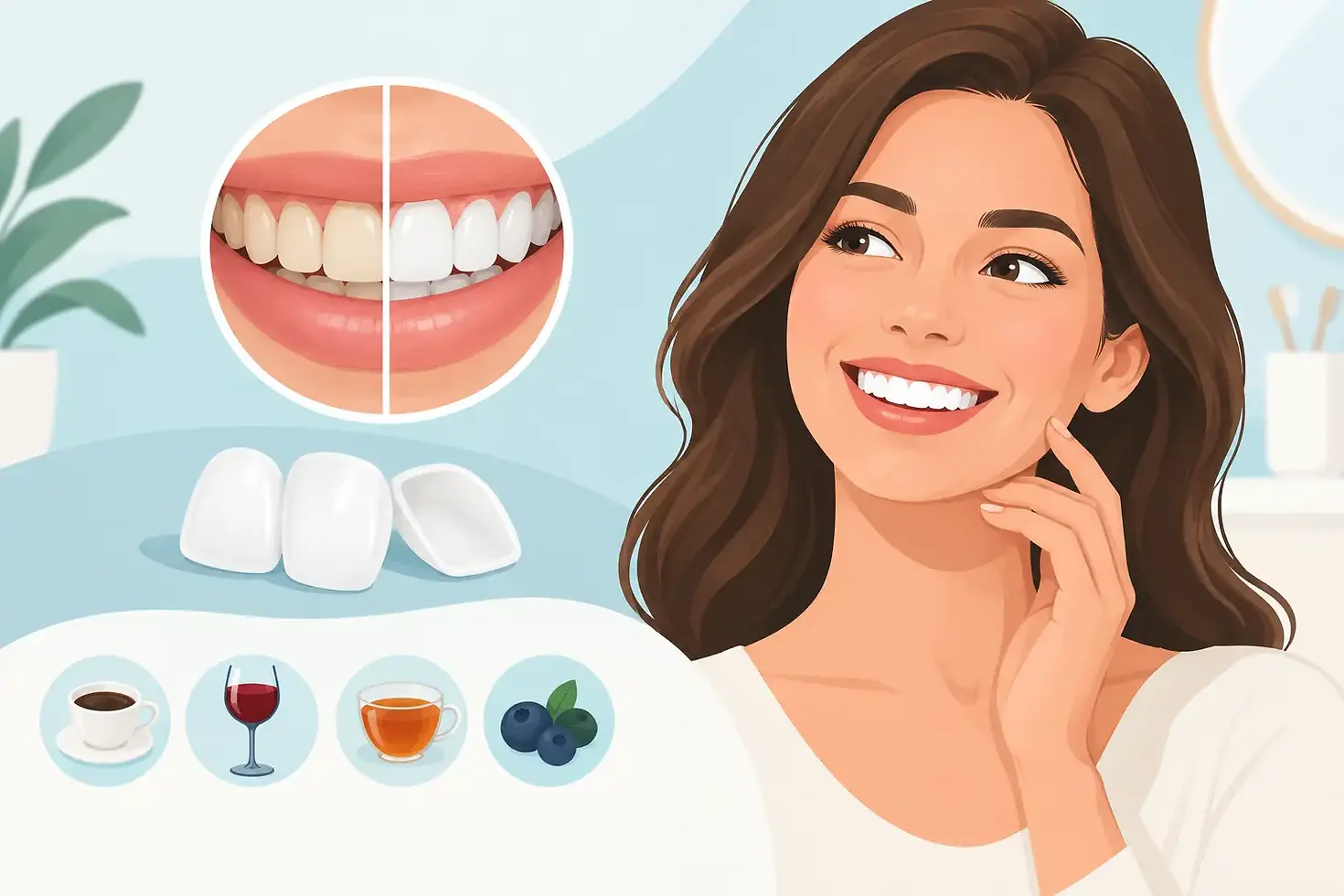
Porcelain veneers are highly resistant to staining. Their smooth, glass-like surface does not absorb pigments in the same way as natural enamel, so tea, coffee, red wine and richly coloured foods are unlikely to change the colour of the porcelain itself.
Composite veneers are different. Composite resin is a high-quality tooth-coloured material, but it is more porous than porcelain. Over time, it can pick up staining from drinks, food, smoking and daily wear. This does not mean composite veneers are a poor choice. They can be a conservative, effective option for improving a smile, particularly where a more affordable or minimally invasive treatment is suitable. It simply means they may need polishing, refreshing or replacing sooner than porcelain.
Even porcelain veneers can appear darker or less bright with time, but the cause is often not a stain within the veneer. Surface deposits, changes to the natural tooth beside it, gum recession or discolouration at the veneer edge can all affect how the smile looks.
What can make veneers look stained?
The distinction matters because the solution should match the cause. Trying to whiten veneers at home, for example, will not change the colour of porcelain or composite and may leave the surrounding natural teeth looking different.
Surface staining and deposits
Tea, coffee, red wine, curry, berries and tobacco can leave a film on teeth and restorations. This is more likely where plaque and tartar have built up, or where the surface of an older composite veneer has become slightly rough. A professional hygiene appointment can often remove these external deposits gently and restore a cleaner appearance.
Staining around the edges
Veneers are bonded precisely to the front of the tooth. If the gumline recedes over time, a small area of natural tooth may become visible near the edge. Natural teeth can stain, while the veneer remains the same shade, creating a noticeable line or colour difference.
Sometimes a dark margin can also indicate wear to the bonding material, a small gap or decay developing beneath or around a veneer. It is not something to ignore or cover up with whitening products. A dental examination can establish whether the veneer simply needs maintenance or whether it needs repair or replacement.
Changes in the surrounding teeth
Natural enamel changes gradually with age and may darken after certain medications, an injury, root canal treatment or frequent exposure to staining drinks. Because veneers do not lighten with tooth whitening, a smile that once matched perfectly may look less uniform later on.
This is one reason careful shade planning is so valuable before cosmetic treatment. A natural-looking result is not only about choosing the brightest possible white. It is about selecting a shade and translucency that suit your complexion, neighbouring teeth and long-term goals.
Wear and surface damage
Porcelain is durable, but no dental restoration is indestructible. Grinding, biting hard objects, using teeth to open packaging or repeated trauma can roughen or chip a veneer. A damaged surface may attract more staining and can feel less smooth to the tongue.
If you clench or grind your teeth, a custom night guard may help protect veneers and your natural teeth while you sleep. This small step can make a meaningful difference to the longevity of cosmetic work.
Porcelain vs composite veneers: the staining difference
For patients whose priority is long-lasting colour stability, porcelain is generally the stronger option. It resists stains exceptionally well and retains its polished appearance when cared for properly. Porcelain veneers are often chosen as part of a considered smile makeover where shape, proportion, colour and function are planned together.
Composite veneers can be beautifully lifelike and usually involve less alteration to the tooth. They are also easier to adjust or repair in many cases. However, they are more likely to lose their shine or absorb colour over the years, especially for people who smoke or regularly drink tea, coffee or red wine.
The best material is not automatically the most expensive one. It depends on your teeth, bite, budget, expectations and the amount of change you would like to achieve. A personalised consultation should include an open conversation about maintenance as well as the immediate cosmetic result.
How to keep veneers looking their best
You do not need to give up your favourite morning coffee to protect veneers. The goal is consistent care, not perfection. Brushing twice daily with a soft toothbrush and fluoride toothpaste helps remove plaque before it hardens into tartar. Choose a non-abrasive toothpaste, as highly abrasive whitening products can gradually dull composite or scratch the polished surface around restorations.
Cleaning between your teeth every day is equally valuable. Floss, interdental brushes or another option recommended for your mouth can protect the gums and the edges of veneers, where problems are most likely to begin unnoticed.
After strongly coloured food or drink, a drink of water or a quick rinse can reduce how long pigments sit on your teeth. If you enjoy coffee or tea regularly, avoiding slow sipping over several hours may also help. Smoking and vaping can contribute to visible staining as well as gum disease, so stopping is one of the most positive choices for both your smile and wider health.
Regular dental and hygiene visits are a practical part of veneer care. Your clinician can check the bond, polish suitable surfaces, monitor your gums and spot small concerns before they become more complex. At Scarborough Dental & Implant Clinic, this kind of ongoing, gentle care is part of protecting a result that looks good and feels comfortable.
Can veneers be whitened if they look dull?
Whitening gel works on natural tooth structure, not on porcelain or composite. It will not bleach a veneer back to a lighter shade. If a porcelain veneer looks dull because of surface deposits, professional cleaning may be all that is needed. If composite has absorbed colour or lost its polish, it may be possible to polish or resurface it, depending on its condition.
Where the natural teeth have darkened around porcelain veneers, professional whitening may improve the surrounding enamel. This needs careful planning, because whitening can make the contrast with existing veneers more obvious. In some cases, replacing older veneers after whitening is the most predictable way to achieve an even shade.
Avoid experimenting with harsh home remedies such as baking soda scrubs, acidic products or abrasive whitening powders. These can damage enamel, irritate gums and roughen composite surfaces, making future staining more likely rather than less.
When should you book a veneer check?
A gradual loss of brightness is usually not an emergency, but it is worth arranging an appointment if you notice a dark line at the edge of a veneer, a sudden colour change, roughness, a chip, sensitivity, bleeding gums or food catching around the restoration. These signs do not always mean the veneer has failed, but they deserve a professional assessment.
Veneers are designed to enhance a healthy smile, not replace the need for ongoing oral care. With a gentle routine, regular reviews and timely attention to small changes, you can enjoy a smile that continues to look natural, bright and confidently yours.


Comments