
Dental Implants vs Dentures - Which Is Right?
- falsgravedental
- Aug 10
- 6 min read
A missing tooth can change more than the way a smile looks. It can make a favourite meal harder to enjoy, affect clear speech, or leave you hiding your mouth in photographs. When considering dental implants vs dentures, the right answer is rarely just about replacing teeth. It is about finding a solution that feels comfortable, looks natural and supports your long-term oral health.
Both treatments can restore a smile beautifully. The best choice depends on how many teeth are missing, the health of your mouth and jawbone, your lifestyle, and how you want your replacement teeth to feel day to day. A careful, personalised assessment is the safest place to start.
Dental implants vs dentures: the key difference
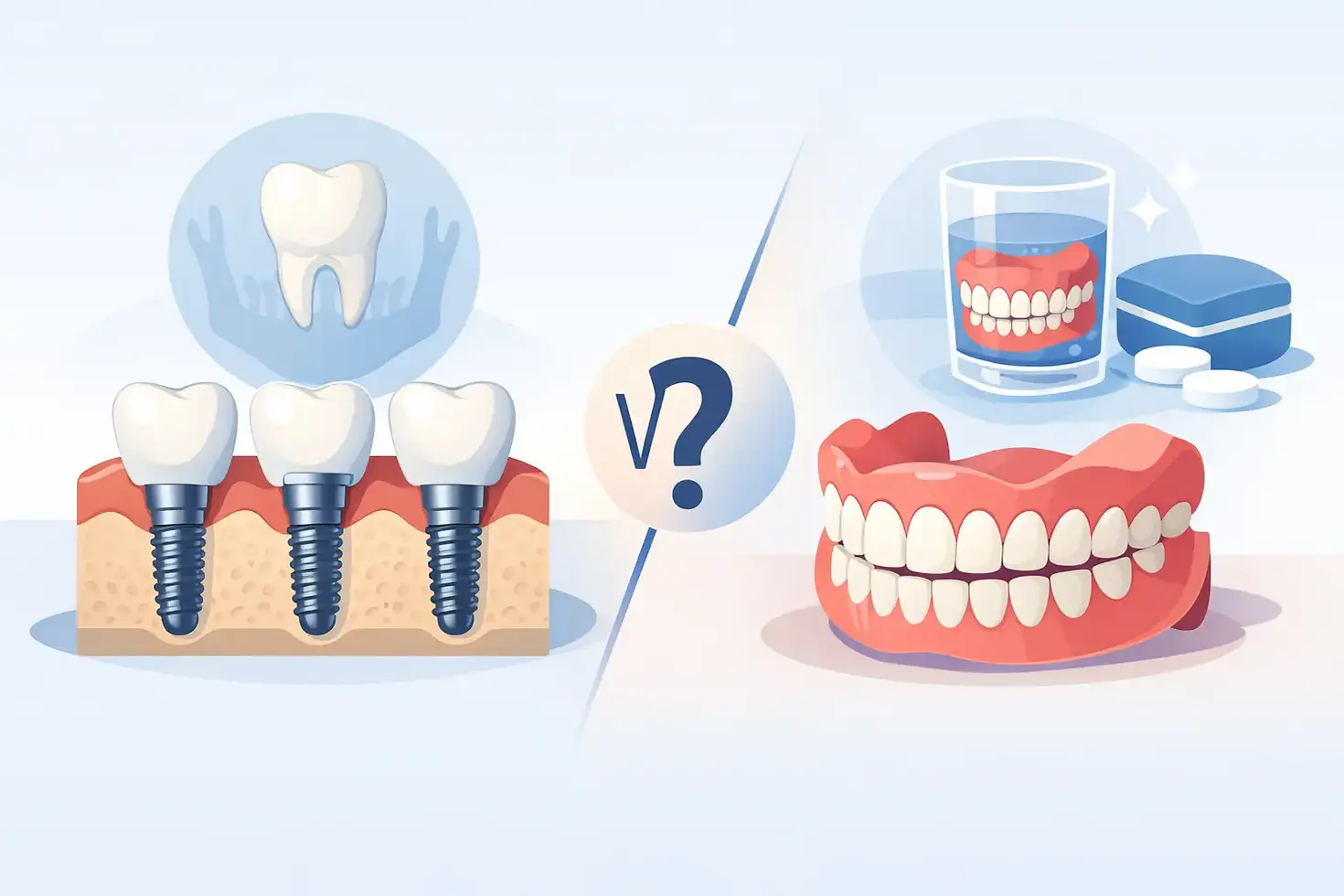
Dental implants replace the root of a missing tooth as well as the visible tooth. A small titanium implant is placed in the jawbone, where it gradually integrates with the bone. Once healed, it can support a natural-looking crown, bridge or full arch of replacement teeth.
Dentures are removable replacement teeth. They may replace a single tooth, several teeth or a full set of upper or lower teeth. Modern dentures can be highly realistic and carefully shaped to suit your face, smile and bite. They sit on the gums, rather than being fixed into the jawbone.
This difference affects how each option feels, how it is cared for and how it supports the mouth over time. Neither is automatically better for every person. The aim is to choose the treatment that gives you reliable function and confidence without placing unnecessary pressure on your health, time or budget.
Why patients choose dental implants
For many people, implants offer the closest experience to having natural teeth again. Because they are fixed in place, there is no need to remove them at night or worry about movement while speaking, laughing or eating. A single implant crown is also designed to blend with neighbouring teeth, helping restore a natural, balanced smile.
Implants can make a significant difference to chewing confidence. They are stable enough for a varied diet once treatment is complete, although it is still wise to avoid using any teeth to crack very hard foods. They can also support a bridge without filing down healthy teeth on either side of a gap.
An important long-term benefit is jawbone support. After a tooth is lost, the bone beneath it can gradually shrink because it is no longer stimulated by the tooth root. An implant transfers chewing forces into the jawbone, which can help preserve its shape. This may be especially valuable when several teeth are missing and facial support is a concern.
What implant treatment involves
Implant treatment is planned in stages and should never feel rushed. Digital imaging and detailed clinical assessment help determine whether there is enough healthy bone and whether the gums are ready to support an implant. If needed, preparatory treatment such as gum care, extraction of failing teeth or bone grafting may be recommended.
The implant placement itself is usually carried out using gentle techniques and local anaesthetic. Many patients are pleasantly surprised by how manageable the appointment feels. Healing takes time because the implant needs to integrate with the bone, often over several months. Temporary teeth may be possible during this period, depending on the individual treatment plan.
Dental implants require a healthy foundation and a commitment to daily cleaning and regular professional maintenance. They cannot decay, but the gums and bone around them can develop inflammation if plaque is allowed to build up. With good care, they are a durable, long-term solution.
Why dentures remain a valuable option
Dentures are not a compromise by default. They remain an effective, accessible way to replace missing teeth, particularly when many teeth are absent or when implant treatment is not suitable at present. A well-made denture can restore the appearance of a smile, support the lips and cheeks, and improve speech and eating compared with leaving gaps.
One of the main advantages is that dentures usually involve a shorter treatment journey. They do not require surgery, and they can be adjusted as the mouth changes. This can be helpful after extractions, while gums are healing, or where a patient prefers a non-surgical solution.
Dentures are also generally less expensive initially than implants. For some patients, that makes them the most realistic way to restore function now. It is worth considering the longer-term picture, however. Removable dentures may need relining, repair or replacement as the gums and jawbone change shape over time.
Getting used to removable teeth
Even carefully crafted dentures can take an adjustment period. They may feel bulky initially, and eating and speaking can require practice. Lower full dentures can be particularly challenging because they have less surface area for natural suction and are more affected by tongue movement.
Modern materials, precise impressions and thoughtful bite design can make a major difference to comfort. Denture adhesive may provide extra reassurance for some people, but a denture that regularly rubs, slips or causes sore spots should be reviewed rather than simply tolerated. Comfort matters, and adjustments are a normal part of achieving a good fit.
Dentures need to be removed and cleaned every day. They should be brushed with a suitable denture cleaner, rinsed after meals where possible, and soaked as advised. The gums, tongue and any remaining natural teeth also need gentle daily cleaning.
How comfort, appearance and function compare
The dental implants vs dentures decision often becomes clearer when patients think about ordinary moments: having a meal out, speaking at work, travelling, smiling without checking whether teeth have moved.
Implants are fixed and tend to feel more like natural teeth. They offer excellent stability, do not cover the roof of the mouth when replacing upper teeth, and usually provide stronger chewing function. Their appearance can be exceptionally natural when the crown, bridge or implant-retained teeth are planned around facial features and gum contours.
Dentures can also look very natural, especially when designed with care rather than as a one-size-fits-all appliance. However, they may move slightly during function, and full dentures can reduce bite force compared with natural teeth or implants. They can also need periodic adjustment as the mouth changes.
For people who want more security without committing to a full fixed implant bridge, implant-retained dentures can be an excellent middle ground. A removable denture is secured onto a small number of implants, reducing movement while keeping cleaning straightforward. This option can be particularly transformative for a loose lower denture.
Cost and timing: looking beyond the first figure
It is understandable to compare treatment costs closely. Dentures usually have a lower upfront cost, while implants involve surgical placement, advanced planning, components and a restoration, making the initial investment higher. The exact cost depends on the number of teeth being replaced, the complexity of the case and whether additional procedures are needed.
The more useful question is often: what will this treatment need from me over the next five, 10 or 15 years? Dentures may need maintenance as the jaw changes. Implants require ongoing hygiene appointments and careful cleaning, but may provide a more stable long-term foundation. Flexible finance options can help some patients spread the cost of carefully planned treatment.
Timing matters too. A denture can often be provided relatively quickly, while implants require healing time. In some cases, an immediate temporary tooth can be fitted after an extraction, but this is not appropriate for everyone. A clinician should explain what is predictable and safe for your particular mouth rather than promising a rushed result.
Who may be better suited to each treatment?
Dental implants may suit you if you are looking for a fixed option, have healthy gums and sufficient bone, and are comfortable with a surgical treatment process. They can be used for one missing tooth, multiple teeth or full-mouth rehabilitation. Smoking, uncontrolled diabetes, active gum disease and certain medical conditions do not always rule out implants, but they need careful discussion because they can affect healing and long-term outcomes.
Dentures may be the better fit if you want to avoid surgery, need a more immediate solution, have significant bone loss, or would prefer a lower initial cost. They are also useful as temporary teeth while a mouth heals or while an implant plan is being completed.
There are occasions when the strongest plan uses both. For example, implants can secure a denture that would otherwise move, or a partial denture may replace teeth in an area where implants are not currently advisable. Good dentistry is not about pushing one option. It is about designing a treatment plan around the person wearing the smile.
A calm, personalised way to decide
Choosing replacement teeth can feel like a major decision, particularly if you have lived with loose dentures, failing teeth or a gap for some time. You do not need to decide everything at one appointment. A thorough consultation should include an examination of your teeth and gums, discussion of your health and goals, appropriate imaging, and clear explanations of the choices available.
At Scarborough Dental & Implant Clinic, treatment planning is centred on comfortable care, clear communication and results that look and feel right for you. Whether you choose implants, dentures or an option that combines both, the most reassuring next step is a conversation focused on your needs. A confident smile starts with a plan you can understand and feel comfortable with.


Comments