
Digital Smile Design Trends for Natural Smiles
A smile makeover should never feel like a leap into the unknown. That is why digital smile design trends are moving beyond dramatic before-and-after images and towards something far more valuable: helping patients see, understand and shape a treatment plan before work begins.
For patients considering cosmetic dentistry, Invisalign, implants or restorative care, this approach can make decisions feel calmer and more personal. The aim is not to create a copy-and-paste ‘perfect’ smile. It is to plan a healthy, natural-looking smile that suits your face, your bite and the way you live.
Digital smile design trends: more personal, less generic
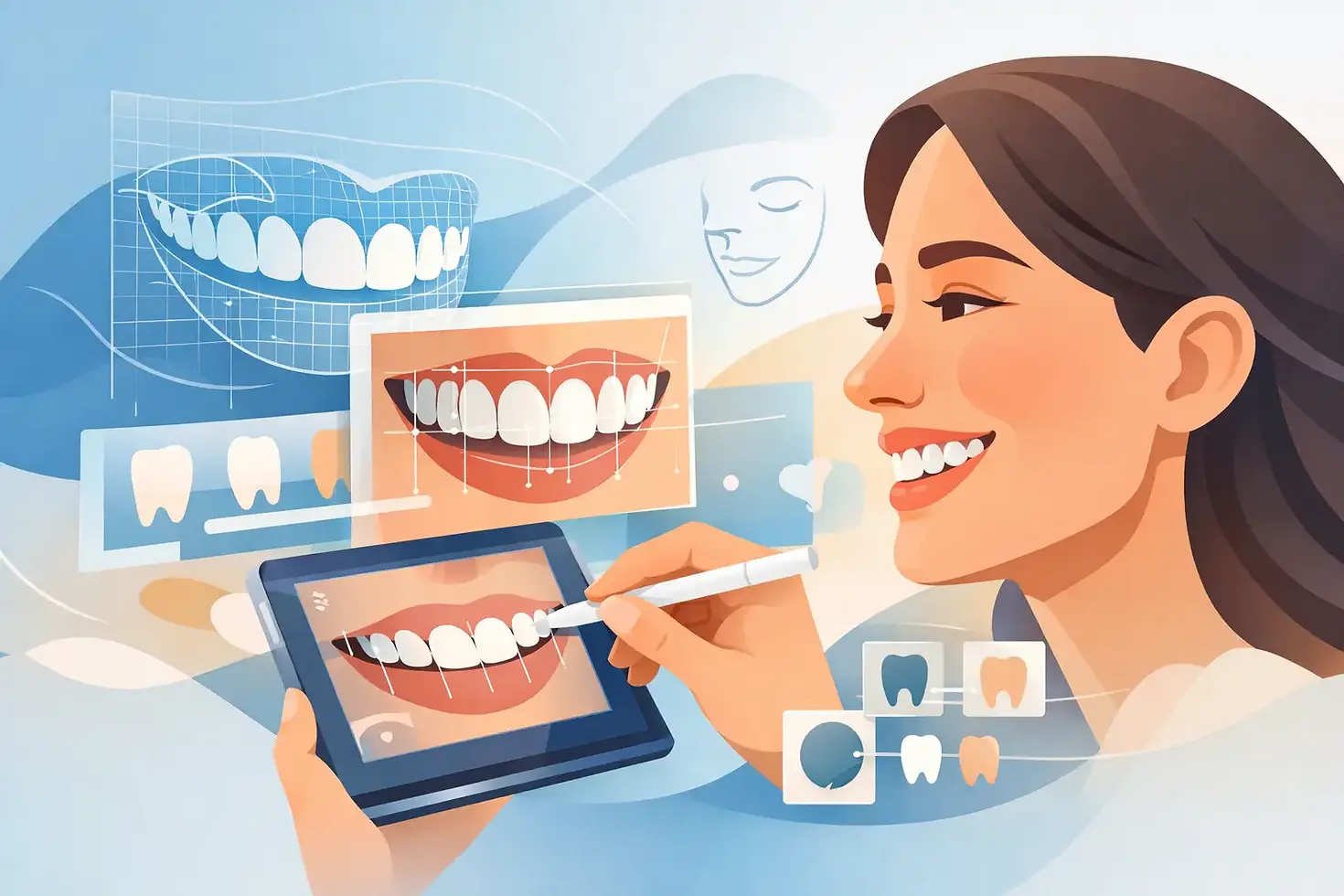
Digital smile design uses photographs, digital scans, facial measurements and planning software to assess how teeth relate to the lips, gums and wider facial features. It gives the dental team a clearer starting point for treatments such as composite bonding, veneers, crowns, teeth whitening and implant restorations.
One of the strongest trends is a move away from very bright, uniform smiles. Many people still want teeth that look fresher and more even, but they also want them to look believable. Small details matter: the proportions of each tooth, gentle variations in surface texture and a shade that complements the complexion rather than overpowering it.
A well-planned smile should look like it belongs to you. For some patients, that means closing a small gap or softening worn edges. For others, it may mean rebuilding several teeth after wear, damage or tooth loss. Digital planning helps make these choices deliberately, rather than relying on guesswork.
Seeing the plan before treatment starts
A digital smile preview is increasingly central to cosmetic consultations. Using photographs and scans, the dentist can show a proposed direction for the smile and discuss what may be achievable. This is especially reassuring if you have felt self-conscious about your teeth for years, or worry that cosmetic treatment could leave you looking unlike yourself.
It is helpful to view a preview as a communication tool, not a guarantee of an identical final image. The mouth is a living, moving environment. Gum health, bite forces, tooth position and the condition of existing teeth all affect what is clinically appropriate and how a final restoration will look.
In some cases, a trial smile or mock-up can give a more realistic sense of planned changes. A temporary material may be placed over the teeth so you can see the length, shape and overall effect in your own mouth. You can speak, smile and consider whether the proposed look feels comfortable. This extra stage can be particularly useful for more extensive veneer, crown or full-mouth rehabilitation cases.
Facial harmony is shaping cosmetic dentistry
The best modern cosmetic dentistry considers more than teeth in isolation. Digital photographs allow the dental team to look at the smile in relation to lip movement, facial symmetry and how much tooth shows when you speak or laugh.
For example, longer teeth may create a more youthful appearance for one person, but they could look out of proportion for another. A very white shade may suit someone who wants a noticeable change, while a softer shade may be the better match for their natural teeth and skin tone. There is no single ideal smile template.
This facially driven planning also matters when replacing missing teeth with dental implants. The position of an implant restoration needs to support appearance, but it must also be designed around the available bone, gum tissue and bite. A beautiful result is only worthwhile when it is stable, comfortable and designed to last.
Digital scans are replacing uncomfortable impressions
Many patients remember traditional impressions as one of the least pleasant parts of dental treatment. Digital intraoral scanning is now widely used to create a detailed three-dimensional model of the teeth and gums without impression trays and paste.
The process is usually quick and gentle. A small scanner captures images of the mouth, which are combined into a digital model for treatment planning and the creation of restorations such as crowns, bridges, veneers, aligners and implant teeth.
Accuracy is a significant benefit, particularly where several parts of a smile need to work together. Digital records can also make it easier to compare changes over time, monitor tooth wear or discuss the stages of a complex plan. However, technology does not replace clinical judgement. The quality of the final result still depends on careful examination, thoughtful design and skilled hands.
Health-led smile makeovers are becoming the standard
Perhaps the most positive of all digital smile design trends is the focus on oral health before appearance. A digital plan can reveal opportunities for improvement, but it should never rush past bleeding gums, untreated decay, unstable teeth or an uncomfortable bite.
If gum disease is present, hygiene care and periodontal treatment may need to come first. If teeth are weakened by grinding or acid erosion, the plan may need to include protective measures such as a night guard and carefully designed restorations. Where teeth are crowded, Invisalign or another orthodontic option might allow a more conservative cosmetic outcome with less alteration to natural tooth structure.
This can mean treatment takes longer than a quick cosmetic fix. It can also mean a more predictable and durable result. A confident smile is easier to maintain when the foundations are healthy.
Conservative treatment is gaining ground
Patients are increasingly asking how to improve their smile while preserving as much natural tooth as possible. Digital planning supports this conversation by showing where small changes may have a meaningful effect.
Teeth whitening, for instance, can be an excellent first step before considering bonding or veneers. Minor chips, uneven edges and small gaps may be improved with carefully placed composite bonding. In other cases, porcelain veneers or crowns may be the most suitable choice because of extensive wear, old restorations or more significant changes in shape and colour.
There are trade-offs. Composite bonding can often be repaired and may require less tooth preparation, but it can stain or chip over time and needs maintenance. Porcelain is highly durable and colour-stable, yet it may involve a greater investment and is not always the most conservative solution. A personalised consultation should explain these differences clearly, without pressure.
Better collaboration for complex care
For patients with missing teeth, failing crowns, worn dentition or bite problems, smile design is not simply a cosmetic exercise. It can bring together restorative dentistry, implant planning, hygiene care and orthodontics in one coordinated plan.
Digital records make it easier to plan the order of treatment. A patient may first need to stabilise gum health, then straighten teeth, replace a missing tooth with an implant and finally refine the appearance of surrounding teeth. Seeing the wider picture helps avoid short-term choices that could complicate future care.
At Scarborough Dental & Implant Clinic, this type of planning is approached with the understanding that every patient has different priorities. You may be focused on eating comfortably again, feeling confident in photographs, avoiding removable dentures or simply keeping your own teeth healthy for as long as possible. Those goals should guide the treatment, not the software.
What to ask at a digital smile design consultation
A good consultation should leave you feeling informed, not overwhelmed. Ask what the proposed design is intended to improve, whether there are more conservative alternatives and what maintenance the result will need. It is also sensible to ask how your bite, gum health and existing restorations affect the plan.
If you are shown a digital preview, ask what is realistic, what may change during treatment and whether a trial smile would be helpful. Clear answers are a sign that your care is being planned around long-term health as well as appearance.
The most encouraging trend is not the technology itself. It is the chance to take part in decisions about your own smile with greater clarity, confidence and care. When digital planning is combined with skilled dentistry and a gentle, welcoming approach, a smile makeover can feel less daunting and much more like a positive step towards feeling comfortable in yourself.


Comments